Overview
The Nuclear Chemistry Summer Schools are a strategic investment by the U.S. Department of Energy in workforce development to meet the long-term national need for nuclear chemists and radiochemists. The NCSS has been running for 40 consecutive years and is administered through the Division of Nuclear Chemistry and Technology of the American Chemical Society.
The NCSS students receive stipends of $4,000 for the 6-week program. In addition to the stipends, the NCSS program pays for transportation to and from the Summer School location, student housing, books, and laboratory supplies. Transferable college credit is awarded through the ACS accredited chemistry programs at San Jose State University (7 units) or Stony Brook University for the Brookhaven site (6 units). The NCSS program pays for all tuition and fees.
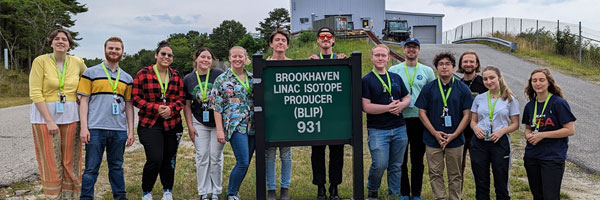
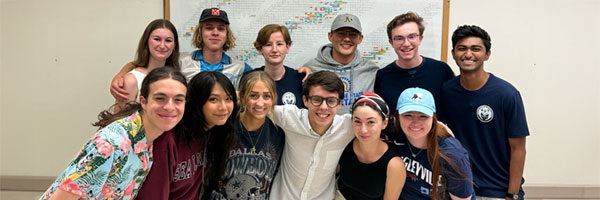
Overall, 24 students are selected to participate in the NCSS. Twelve students are placed at the West Coast summer school at San Jose State University and twelve students are placed at the East Coast summer school at Brookhaven National Laboratory.
Participants in the Summer Schools are encouraged to join a research project during the following summer at a university or federal institution. Considerable personal assistance is provided to secure summer positions and admission to PhD programs at leading universities. An "Outstanding Student" is selected from each summer school site to attend the American Chemical Society national meeting the following spring, all expenses paid.
History
The Nuclear Chemistry Summer School (NCSS) was founded in 1984 to revitalize interest in nuclear and radiochemistry, fields that were facing declining educational opportunities. Through the dedicated efforts of Dr. Patricia A. Baisden of Lawrence Livermore National Laboratory, initial funding was secured to launch the program at San Jose State University, hosting 12 students. Recognizing the program's success, a second site was established at Brookhaven National Laboratory in 1989.
Over the past 40 years, NCSS has provided hands-on education to over 870 undergraduates in physical sciences and engineering, with more than 20% pursuing careers in nuclear science. In recent years, nearly 50% of participants have entered the nuclear field, contributing to a strong pipeline of skilled professionals in academia, industry, and government.
The continuous support of the Department of Energy for four decades has been instrumental in maintaining the program's high standards. This sustained funding, combined with the commitment of site directors, instructors, and administrative staff, ensures NCSS remains a leading institution in training the next generation of nuclear chemists. Today, the program continues to inspire students, offering unparalleled academic and research experiences in nuclear science.
Coming full circle, Dr. Carolyn Anderson, who attended the inaugural NCSS class in 1984 where Nobel laureate Glenn T. Seaborg gave a guest lecture, went on to receive the 2022 Glenn T. Seaborg Award for Nuclear Chemistry. Her pioneering work in radiopharmaceutical chemistry exemplifies the long-term impact of the summer school program on participants' careers and contributions to science.
Curriculum
The NCSS program offers a comprehensive curriculum that combines lectures, hands-on laboratory exercises, guest lectures, and field trips. Students begin with foundational lectures covering key topics such as nuclear science, radiochemistry, and their real-world applications. Laboratory sessions introduce students to advanced instrumentation and techniques used in nuclear research and development.
In addition to the formal instruction, the course includes a Guest Lecture Series where students engage one-on-one with experts in nuclear chemistry and radiochemistry fields. These lectures cover themes such as environmental radiochemistry, nuclear energy, nuclear medicine, nuclear security, and actinide chemistry. Students at both locations have consistently rated the guest lecture program as one of the highlights of the summer school. While the research talks are enlightening to the students, the opportunity to meet in a social setting provides the opportunity for students to get an idea of "a day in the life of a nuclear chemist or radiochemist".
Field trips further enrich the learning experience, providing students with exposure to prominent nuclear research facilities, university centers, and National Laboratories. These visits offer a unique opportunity to engage with professionals working in nuclear medicine, nuclear forensics, and related fields, making the NCSS program a truly immersive educational experience.
Eligibility
Sophomores or Juniors
Enrolled at US institutions
Required Coursework
Two years of chemistry, one year of physics, and one year of calculus
US Citizenship
Applicants must be US citizens